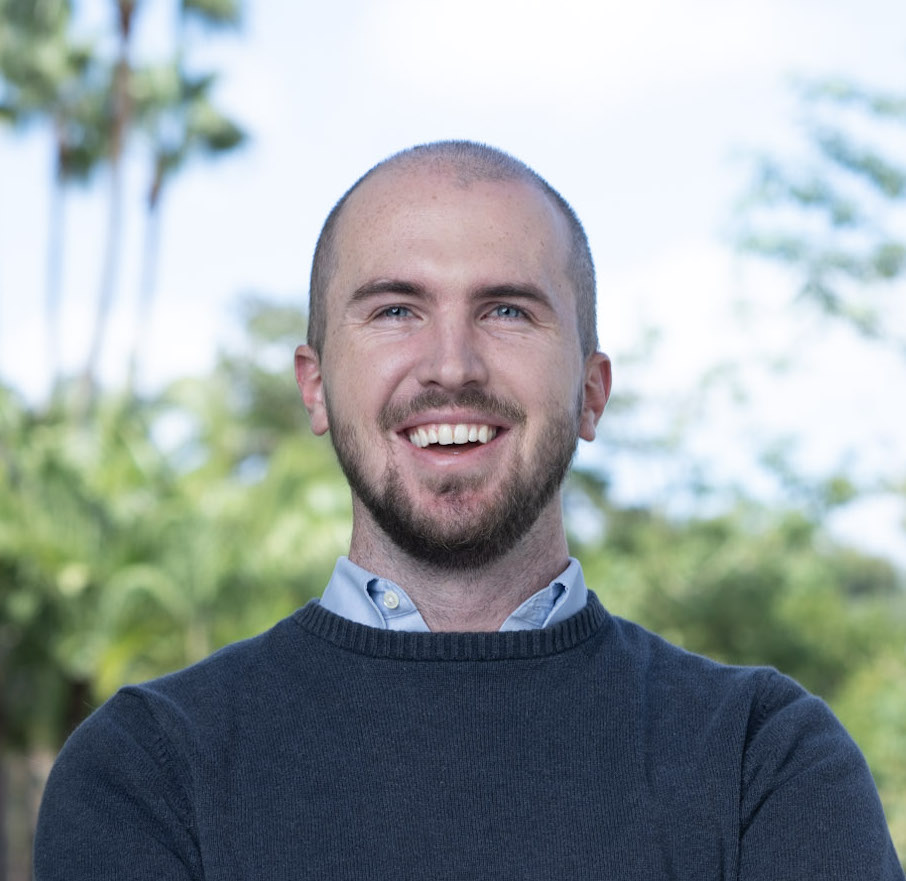
Hello! I am a Dean's Assistant Professor in Business Administration within the department of Data Sciences and Operations (DSO) at the University of Southern California Marshall School of Business. Prior to joining DSO, I completed my PhD at the School of Operations Research and Information Engineering at Cornell University. I currently serve as an associate editor for the journals Mathematics of Operations Research, Operations Research, and Stochastic Systems. I am very grateful to have my research agenda supported by generous external sources, including through a National Science Foundation (NSF) CAREER Award.
• This one-pager summarizes my current research (and teaching) interests. For more details, please see my recent publications or the overview below.
• Broadly, I study operations with dynamics characterized by two essential properties: randomness and history dependence. We have found that these features are prominent in services, where my work focuses on customer-agent interactions at the level of individuals.
• My teaching is focused on undergraduate business education. We have recently launched a new core operations management (OM) course that teaches students to formulate mathematical models at real-world scale by leveraging AI-assisted pair-programming for implementation. Please see a recent syllabus or this journal paper for more details.
Asymmetries of Service: Interdependence and Synchronicity
Daw and Yom-Tov
Operations Research
(2026)
Modeling First: Rethinking Undergraduate Operations Management with AI
Daw, Gupta, and Rusmevichientong
Informs Trans. on Education
(2026)
Optimal Call-In Policies Under Travel-Induced Risk: Application to Hybrid Hospitalization
Zychlinski, Mendelson, and Daw
Queueing Systems
(2026)
How to Staff When Customers Arrive in Batches
Daw, Hampshire, and Pender
Management Science
(2025)
Convergence of Batch Arrival Queues to Shot-Noise Processes
Daw, Fralix, and Pender
Operations Research
(2025)
The Co-Production of Service: Modeling Services Using Hawkes Processes
Daw, Castellanos, Yom-Tov, Pender, and Gruendlinger
Management Science
(2025)
Conditional Uniformity and Hawkes Processes
Daw
Mathematics of Operations Research
(2024)
Matrix Calculations for Moments of Markov Processes
Daw and Pender
Advances in Applied Probability
(2023)
Services Shaped by History
Daw
Queueing Systems
(2022)
An Ephemerally Self-Exciting Point Process
Daw and Pender
Advances in Applied Probability
(2022)
On the Distributions of Infinite Server Queues with Batch Arrivals
Daw and Pender
Queueing Systems
(2019)
New Perspectives on the Erlang-A Queue
Daw and Pender
Advances in Applied Probability
(2019)
Queues Driven by Hawkes Processes
Daw and Pender
Stochastic Systems
(2018)
Working Papers
Stopping Self-Excitement
Daw
(2026)
On the Cluster Duration Distribution of the Markovian Hawkes Process
Daw and Goel
(2026)
Print a Little, Produce a Lot: 3D-Printing in Large-Scale Manufacturing
Daw, Gupta, He, and Ouyang
(2026)
Due Process on Hold: A Queueing Framework for Improving Access in SNAP
Daw, Pache, and Zhou
(2026)
What You Say Versus When You Say It: Service Predictions with LLMs and Stochastic Processes
Castellanos, Daw, and Yom-Tov
(2026)
A Two-Time-Scale Hawkes Process for Modeling Multi-Stakeholder Court Cases
Kadzelashvily*, Daw, and Yom-Tov
Winter Simulation Conference
(2026)
Contrasting Activity-Based and Time-Based Systematic Closure Policies
Castellanos, Daw, Ward, and Yom-Tov
Winter Simulation Conference
(2024)
Scorigami: Simulating the Distribution and Assessing the Rarity of NFL Scores
Moyer*, Railey*, Daw, and Gutekunst
Winter Simulation Conference
(2024)
Markovian Simulations of Systems with Concurrent Hawkes Service Interactions
Daw and Yom-Tov
Winter Simulation Conference
(2023)
Analyzing the Spotify Top 200 Through a Point Process Lens
Harris*, Liu*, Park*, Ramireddy*, Ren*, Ren*, Yu*, Daw, and Pender
(2019)
Queue Length Rounding and Delayed Information in Disney World Queues
Nirenberg*, Daw, and Pender
Winter Simulation Conference
(2018)
* Undergraduate student
BUAD 313
(USC Marshall)
Advanced Operations Management and Analytics
Instructor
(Fall 2026, 2024, 2023+)
BUAD 311
(USC Marshall)
Operations Management
Instructor
(Fall 2022, 2021, 2020)
MATH 112
(Cornell Prison Education Program)
Contemporary Mathematics
Instructor
(Fall 2019, Spring 2019)
ORIE 3510/5510
(Cornell Engineering)
Introduction to Engineering Stochastic Processes I
Instructor
(Summer 2017, 2016)
+ New core course which debuted Fall 2023!
What's my research about?
My research focus is in operations research and operations management, with a methodological emphasis on stochastic models and applied probability and a contextual emphasis on services. On a technical level, my work deals with queueing theory, point processes, and history-dependent stochastic processes. I am particularly interested in models shaped by interactions, in which the history of activity in one process can drive future activity within itself and reciprocally in other inter-related processes. Because these are stochastic models, the conceptual forebearer is the self-exciting Hawkes process.
Forms and friends of self-excitement: history dependence; history-driven; ripple effect; domino effect; virality; contagion; infection; influence; interaction; chain-reaction; rich-get-richer; virtuous cycle; "when it rains, it pours"1; "what's past is prologue"2,3; "the past is never dead. it's not even past."4
Contextually, much of my interest in these probability models stems from their uses in service operations, where the progression of a service interaction is shaped by the history of that customer-agent exchange so far. For motivation, think about a service conducted over a series of messages: when the customer sends a question, the agent is prompted to reply, and that response may beget further questions from the customer.
By comparison to the prevailing system-level approaches to services in queueing theory, these interaction models are more micro than macro: they build up from a single customer-agent interaction rather than work down from a birds-eye view of the system. My research has found strong empirical evidence for history-driven phenomena at this intra-service level through data from co-produced services in customer contact centers. My work has also identified surprising connections between Hawkes processes and well-known objects in enumerative combinatorics, which supports analysis of these new micro-level service models. For example, these techniques allow us to better understand how both the customer and the agent contribute to the service progression, which emphasizes modeling desiderata that are important specifically for services by contrast to seemingly similar areas, such as computation or production.
What's operations management about?
I like to tell my classes that in operations management we are both poets and quants. I've described OR/OM as a form of mathematical poetry, in which we translate real-world scenarios and problems into models and data. Like the best poems can, our descriptions are meant to give us new perspectives on the systems and processes that we study, and these perspectives are likewise meant to guide and shape our decisions. As operations modelers, our goal is to think carefully about what form and style of models are right for our situation, and then to translate those models back to reality to solve the original problem at hand. We have a responsibility to remember, though, that decisions on processes often become policies, and few have the power to make policy.
What's my teaching about?
For the last several years, I have taught a new version of the core undergraduate OM course, BUAD 313, which I co-developed with my colleague Paat Rusmevichientong and launched in Fall 2023. By comparison to the traditional OM course, BUAD 313 focuses on teaching modeling first and foremost. The key learning objectives center on formulating optimization (e.g., LPs, IPs) and simulation (e.g., Markov chains, queues, discrete events) models and implementing them at real-world scale. This course is the subject of a recent journal publication in which we describe both the philosophy of the class and the ways in which we use generative AI to lower technical barriers while keeping students focused on learning how to model. Marshall celebrated this new course with an Award in Teaching Excellence in 2024.